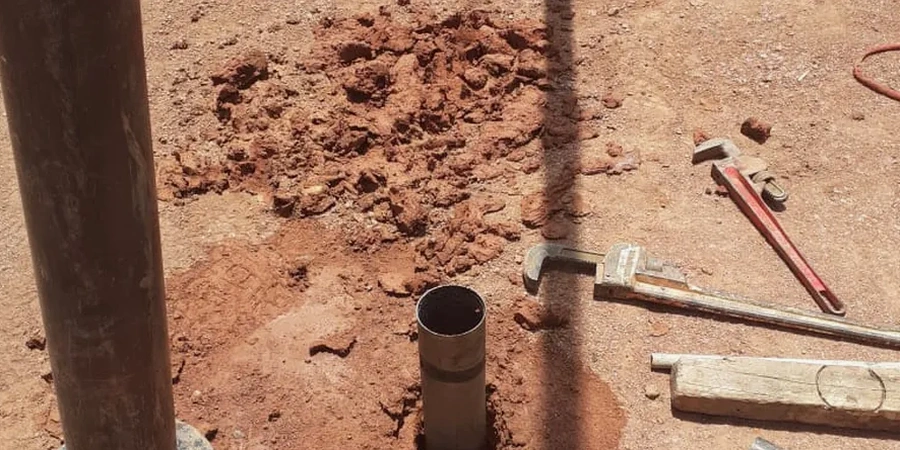
In-situ testing forms the backbone of geotechnical site characterization in Memphis, providing direct measurements of soil and rock properties without disturbing the natural state of the ground. This category encompasses a wide range of field testing methods—from density and compaction assessments to strength, permeability, and deformation evaluations—all performed on location. For a city built on a complex blend of Mississippi River alluvium, loess, and underlying sedimentary formations, understanding subsurface behavior in real time is not just best practice; it is essential for managing foundation design, slope stability, and long-term structural performance.
Memphis sits atop the Mississippi Embayment, a deep basin filled with unconsolidated to semi-consolidated sediments. The near-surface geology is dominated by Quaternary loess—wind-blown silt deposits that can extend tens of feet thick—overlying terrace gravels and the Jackson Formation’s clay-rich strata. These loess soils are particularly susceptible to collapse upon wetting and erosion, while deeper alluvial clays can exhibit significant shrink-swell potential. In-situ testing becomes critical here because laboratory samples alone often fail to capture the true variability, moisture sensitivity, and fabric of these materials. Techniques like the field density test (sand cone method) allow engineers to verify compaction levels directly in loess fills, while cone penetration testing can map soft clay lenses that threaten deep foundations.
All in-situ investigations in Memphis must comply with the Tennessee Department of Transportation (TDOT) Standard Specifications for Road and Bridge Construction, which reference ASTM International standards for field testing procedures. For federally funded projects, the Federal Highway Administration (FHWA) guidelines apply, and the U.S. Army Corps of Engineers’ manuals govern work near the Mississippi River levees. Key ASTM standards include D1556 for the sand cone density test, D1586 for the Standard Penetration Test (SPT), D5778 for cone penetration testing (CPT), and D4428/D4428M for crosshole seismic testing. Local building codes in Shelby County also require certified field technicians and regular equipment calibration, ensuring that data collected on-site meets the stringent demands of Memphis’s variable ground conditions.
Projects throughout the Memphis metropolitan area rely heavily on in-situ testing. Large-scale commercial developments in East Memphis require rigorous compaction verification beneath slab-on-grade foundations, often calling for repeated field density test (sand cone method) checks during fill placement. Infrastructure work—such as the expansion of I-240 or new interchanges along I-269—demands continuous CPT soundings to delineate soft zones that could compromise bridge abutments. Industrial facilities near President’s Island depend on vane shear testing to assess the undrained strength of saturated clays under heavy storage tanks. Even residential construction in loess-bluff areas triggers in-situ evaluations to confirm that cut slopes will remain stable through Memphis’s wet-dry seasonal cycles.
In-situ testing measures soil and rock properties directly in the field without sample disturbance, preserving natural stress states, moisture conditions, and fabric. This is critical in Memphis loess and alluvial clays, where sampling can alter collapse potential or shrink-swell behavior. Field tests provide immediate data for construction decisions, while laboratory tests complement them with controlled-condition strength and classification results.
The Standard Penetration Test (SPT) and Cone Penetration Test (CPT) dominate local practice due to the deep alluvial deposits. The sand cone density test is widely used for compaction verification in loess fills. Vane shear testing sees frequent application in soft Jackson Formation clays, and pressuremeter testing is specified for critical foundation designs where modulus values are needed.
Yes. TDOT specifications require field technicians to hold current certifications from recognized programs such as NICET or ACI for density testing. Shelby County building codes mandate that all in-situ test results be stamped by a licensed Professional Engineer registered in Tennessee. Equipment must be calibrated per ASTM standards, with calibration records maintained on-site during testing.
The thick loess cover demands methods sensitive to collapse potential, such as plate load tests or CPT with pore pressure measurement. Deep alluvial clays require vane shear or CPT for undrained strength profiling. Gravelly terrace deposits often preclude CPT and necessitate SPT or Becker penetration testing. Seasonal high groundwater in the Mississippi Embayment makes permeability testing essential for dewatering design.